

ISO 9001 : 2015

ISO 9001 : 2015
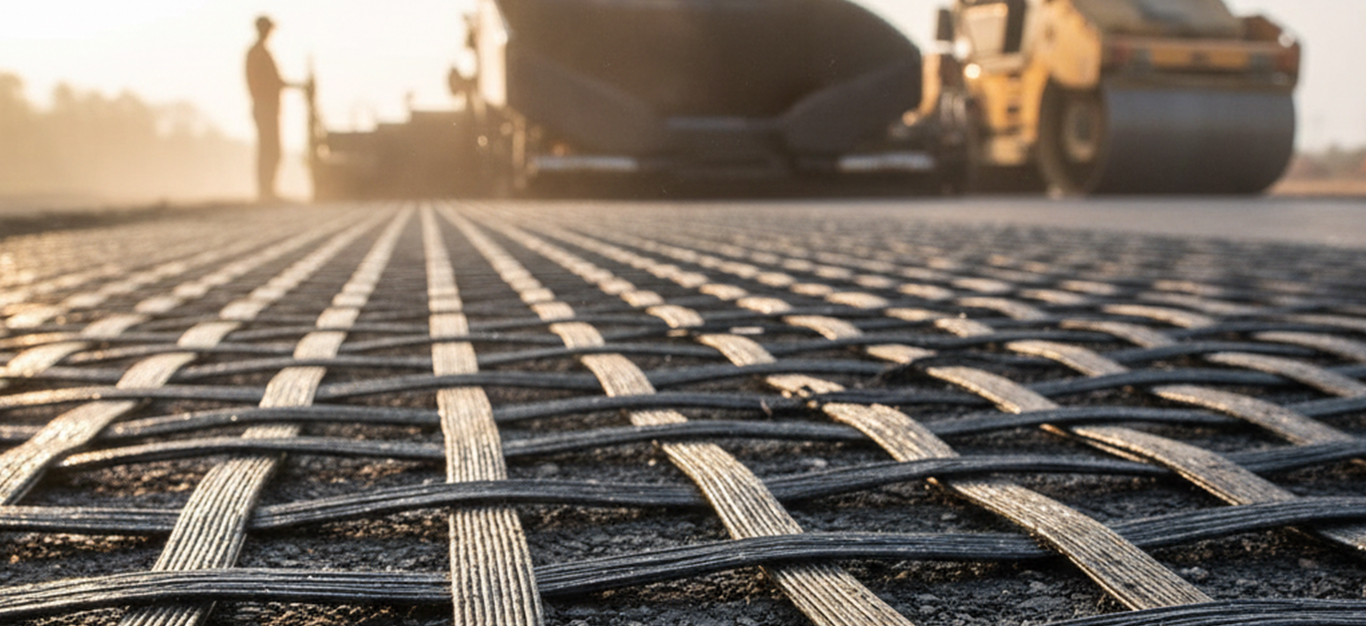
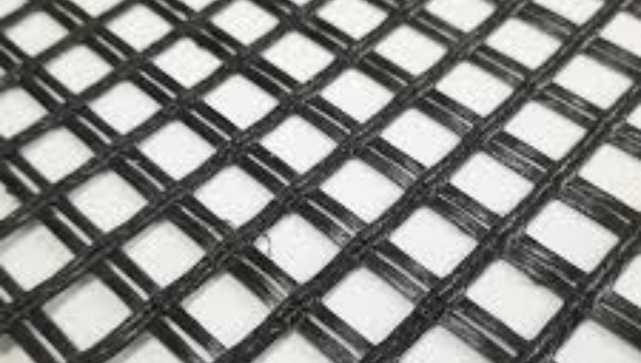
TerraShield Glass Fiber Grid (Fiberglass Geogrid) is a reinforcement material made from glass fibers that are coated with a protective polymer, such as bitumen or PVC, to improve durability and resistance to chemical and environmental damage.


| PROPERTIES | TEST METHOD | UNIT | TSI-02 |
| Tensile Strength (MD x CMD) | ASTM D 6637 | kN/m (≥) | 100 x 100 |
| Tensile Elongation | % | 3 (±1) | |
| Young’s Modulus E | --- | MPa | 73000 |
| Melting Point of Coating | ASTM D 276 | ° C (>) | 250 |
| Mass per Unit Area | ASTM D 5261 | g/m² (>) | 400 |
| Aperture Size | --- | MM | 12.5 x 12.5 |
| Roll Width | --- | Meter | 1.5 |
| Roll Length | --- | Meter | 100 |
| Material | Glass Fiber Coated with Asphalt Compatible Polymer | ||
MD – Machine Direction | CMD – Cross Machine Direction | With Pressure Sensitive Adhesive
*The values given are indicative and correspond to average results obtained in our laboratories and testing institutes.
Download FactsheetA Glass Fiber Grid, also known as Fiberglass Geogrid, is a high-strength reinforcement material manufactured from alkali-resistant glass fibers coated with a polymer or bituminous layer. It is widely used in road construction, asphalt reinforcement, and pavement rehabilitation to control cracking and improve structural performance. So, waterproofing glass fiber grid reinforcement can prevent cracks boosting structural performance.
Glass Fiber Grids are used in:
• Asphalt overlays and resurfacing works
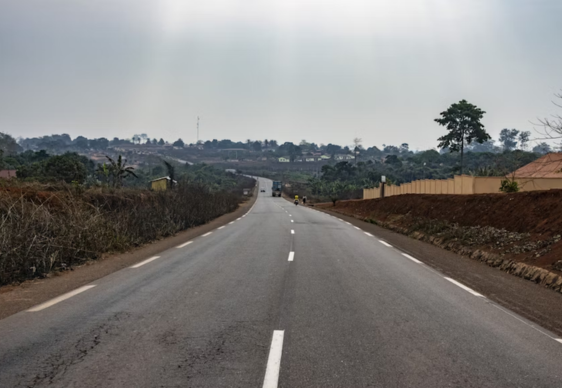
• National highways and expressways
• Airport runways and taxiways
• Urban roads and flyovers
• Bridge decks and rigid pavement overlays
• Industrial yards and container terminals
They are especially effective in crack prevention and reflective crack control. This is how there is increasing use of high-strength glass fiber grid for industrial use and glass fiber grid for parking slope to prevent slope problems.
Glass Fiber Grids absorb and redistribute tensile stresses within asphalt layers. By reducing stress concentration and arresting crack propagation, they:
• Extend pavement service life
• Reduce maintenance frequency
• Improve load distribution
• Minimize reflective cracking
This shows how glass fiber grid improves wall strength. It also leads to significant life-cycle cost savings for road authorities and glass fiber grid becomes a preferred choice for most industrial applications.
Reflective cracking occurs when existing cracks in old pavement layers propagate upward into new asphalt overlays. Glass Fiber Grid acts as a stress-absorbing interlayer, interrupting crack movement and significantly delaying or preventing reflective cracks.
Key properties include:
• High tensile strength (typically 50–150 kN/m)
• Low elongation (<4%)
• Excellent thermal stability
• High resistance to fatigue loading
• Alkali and chemical resistance
• Strong bonding with asphalt layers
These properties make it ideal for high-traffic road conditions.
Installation typically involves:
1. Cleaning and preparing the existing pavement surface
2. Applying tack coat or bitumen emulsion
3. Laying the Glass Fiber Grid under tension
4. Ensuring proper overlap and alignment
5. Applying asphalt overlay
Proper installation ensures maximum performance and durability. The use of glass fiber grid rolls 50m / 100m ensure smooth installation of the grids.
Absolutely. Glass Fiber Grids perform well under extreme temperature variations, heavy monsoon rainfall, and high axle loads commonly experienced on Indian roads. They are widely used in projects under IRC, MoRTH, NHAI, and state PWD specifications. The grids are also useful in various slope applications such as glass fiber grid for slope stabilisation and glass fiber grid for railway slope stabilisation.
Parameter Glass Fiber Grid Polyester Geogrid
Tensile Modulus Very High Moderate
Elongation Low Higher
Crack Control Excellent Moderate
Thermal Stability Superior Limited
Asphalt Reinforcement Highly Suitable Less Preferred
Glass Fiber Grids are preferred for asphalt reinforcement, while polyester grids are often used in soil stabilization.
Yes. By improving structural efficiency, Glass Fiber Grids can allow for:
• Reduced overlay thickness
• Lower material consumption
• Faster construction cycles
This results in both cost and time savings without compromising performance.
Glass Fiber Grids are available in various:
• Mesh sizes (typically 25×25 mm, 40×40 mm)
• Tensile strengths (50 kN/m to 150 kN/m or higher)
• Roll widths and lengths
Custom specifications can be provided based on project requirements. Though glass fiber grid rolls 50m / 100m is the standard option, check the measurement to ensure the right use of glass fiber. So, there is need for glass fiber grid bulk order from professional sources.