

ISO 9001 : 2015

ISO 9001 : 2015
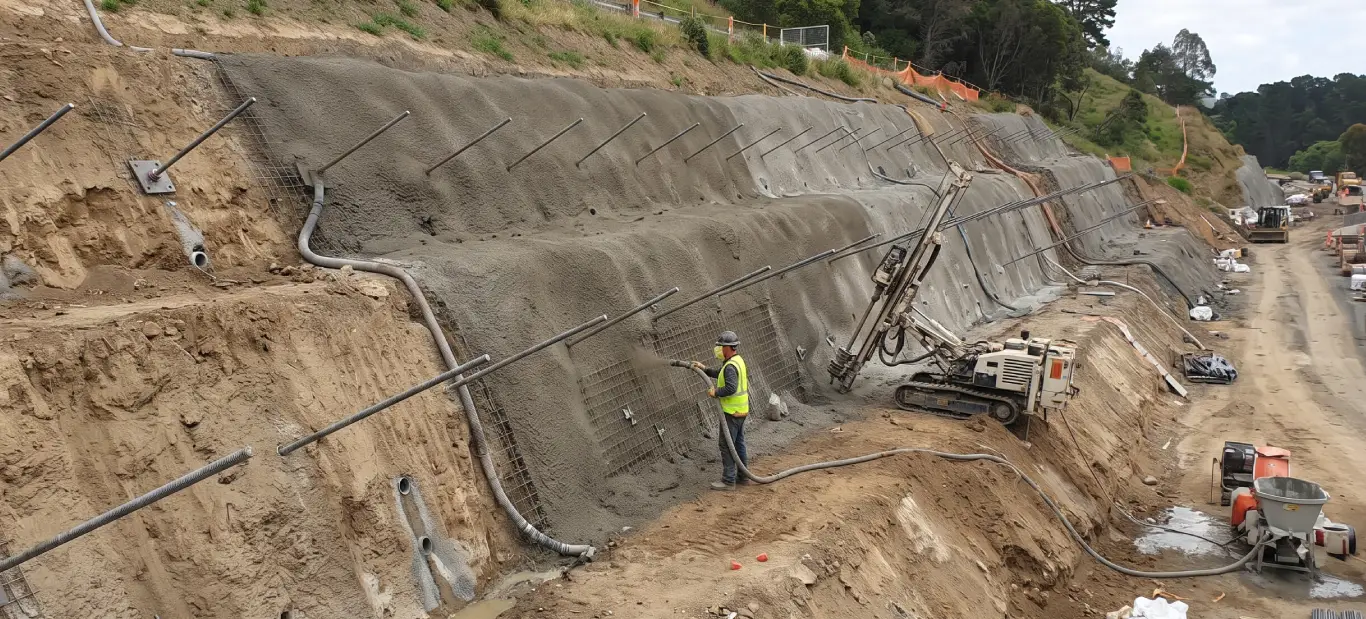
In construction, a soil bar (also called a soil nail bar or solid bar) is the steel bar that is inserted into a drilled hole and grouted to reinforce a slope, cutting or excavation. It is the main load-carrying element of a soil nail: the bar carries tension, and the grout bonds it to the surrounding soil.
TerraShield Soil Nail / Solid Bar is a high-strength steel bar with a tensile strength of 500–1200 MPa, a diameter of 28–38 mm and lengths of 1.5–6 m. Soil bars are used for highway and railway cut slopes, embankments, landslide control, deep excavations and soil nail retaining walls. For permanent works, they can be hot-dip galvanised, epoxy coated or given double corrosion protection.
The soil nailing technique reinforces the existing ground without requiring major structural changes. When a slope tends to move, the nails resist this movement through friction between the grout and surrounding soil. Soil nails are passive reinforcement elements, meaning they are not pre-tensioned. Instead, they develop resistance as the soil experiences slight movement.
A surface facing, such as shotcrete, distributes the load and prevents loose soil from falling away. The installation process generally involves the following steps:
1. Excavation: A section of the slope is excavated in stages, usually starting from the top.
2. Drilling: Holes are drilled into the soil at the planned angle, depth and spacing.
3. Inserting and Grouting: Steel bars are inserted into the drilled holes and secured with grout.
4. Drainage Installation: Drainage arrangements, such as weep holes, are installed behind the facing to control water pressure.
5. Facing Application: Reinforcement mesh and shotcrete are applied, followed by fixing plates and nuts.
6. Repeating the Process: The excavation and reinforcement process continues in stages until the required depth is reached.
Soil nails are available in different types depending on ground conditions, installation requirements and project specifications. The three commonly used types are:
1. Solid Bar Soil Nails: These consist of threaded steel bars installed in pre-drilled holes and secured with grout. They are widely used because of their strength, reliability and straightforward installation.
2. Self-Drilling (Hollow Bar) Soil Nails: These nails drill into the ground while grout is injected through the hollow centre of the bar. They are particularly useful in loose or sandy soils where drilled holes may collapse.
3. Driven Soil Nails: These consist of steel bars or angles driven directly into the ground without grouting. They offer quick installation and are commonly used for smaller or temporary reinforcement projects.
For permanent applications, soil nails require suitable corrosion protection. Common protection methods include galvanising, epoxy coating and providing adequate grout cover.
A soil nail solid bar is popular in civil engineering because of its strength, simple installation and adaptability. It is generally threaded along its length, allowing plates and nuts to be fixed at different positions. The bars can also be cut to the required size or extended using suitable couplers.
Spacers help maintain the correct position of the bar inside the drilled hole, ensuring uniform grout coverage. Solid bar soil nails are particularly suitable for ground conditions where drilled holes remain stable, including stiff clays, dense sands and weathered rock.
Soil nailing is increasingly important in India's infrastructure and construction sector. Steep hill roads, heavy monsoon rainfall, expanding urban areas and large-scale excavation projects create a growing need for reliable ground reinforcement solutions.
Some of the major applications of soil nails in India include:
• Highway and Railway Cut Slopes: Reinforcing steep slopes along roads and railway networks to reduce the risk of soil movement.
• Embankments and Road Widening: Improving ground stability during infrastructure expansion and road development.
• Landslide Control: Providing additional reinforcement to vulnerable slopes in hilly and mountainous regions.
• Deep Excavations: Supporting excavation sites for basements, metro infrastructure and commercial construction projects.
• Retaining Walls: Strengthening retaining structures and repairing existing walls that show signs of instability.
Soil nails for slope stabilisation provide internal reinforcement when a natural or excavated slope cannot remain stable on its own. They increase the shear resistance of the soil mass and help reduce unwanted ground movement.
A surface protection system, such as shotcrete or a protective erosion-control blanket, helps prevent soil erosion. Proper drainage arrangements are also important because they reduce water pressure within the slope and improve overall stability.
A soil nail retaining wall is constructed using a top-down excavation and reinforcement process. As the excavation progresses, soil nails are installed to reinforce the surrounding ground, while a shotcrete facing creates the exposed wall surface.
This construction technique can save space and time compared with some conventional retaining wall systems. It is particularly useful near roads, buildings and restricted construction sites. Soil nailing can also be considered for strengthening existing retaining walls that have started to show signs of failure.
Soil nailing offers several advantages for slope reinforcement, excavation support and retaining wall construction. Its major benefits include:
• Strong Reinforcement: Improves the shear strength of the soil mass and helps maintain ground stability.
• Faster Construction: Reinforcement is installed progressively during excavation, reducing the need for separate large-scale wall construction.
• Reduced Equipment Requirements: Smaller drilling rigs can be used in certain projects, making the technique suitable for steep and restricted sites.
• Flexibility: The reinforced soil mass can accommodate some ground movement without the same cracking behaviour associated with certain rigid structures.
• Space-Saving Design: Soil nailing generally requires less construction space than conventional retaining wall systems.
• Cost-Effective Solution: On suitable sites, it can be more economical than constructing heavy concrete retaining walls.
• Adaptability: The system can be combined with drainage arrangements, shotcrete facings and vegetated surface protection.
Soil nailing and ground anchoring are both used to improve ground stability and support excavations. However, they differ in their installation methods, load behaviour and structural applications. Soil nails are passive reinforcement elements installed at relatively close spacing, whereas ground anchors are generally pre-tensioned and installed at wider spacing.
| Feature | Soil Nails | Ground Anchors |
|---|---|---|
| Load Behaviour | Passive, loaded as soil moves | Active, pre-tensioned |
| Spacing | Closely spaced, with more reinforcement elements | Widely spaced, with fewer anchors |
| Length | Generally shorter | Generally longer |
| Load per Element | Lower | Higher |
| Movement Control | Allows some ground movement | Provides tighter movement control |
| Typical Applications | Cut slopes, excavations and retaining walls | Deep excavations, high-load applications and movement-sensitive structures |
| Installation | Relatively straightforward installation | Requires stressing and testing |
Soil nails are generally suitable for slope reinforcement and shallow to medium-depth excavations. Ground anchors are preferred when higher loads need to be transferred or ground movement must be tightly controlled. Depending on project requirements, both systems can also be used together.
For a detailed side-by-side comparison, including when a self drilling anchor is the better option, read Ground Anchor vs Soil Nail: Key Differences and When to Use Each.
The performance of a soil nailing system depends on several design factors, including nail length, spacing, installation angle and facing requirements. Ground conditions, groundwater levels and slope geometry must also be considered before selecting the appropriate reinforcement system.
Soil nailing projects should follow recognised engineering guidelines and applicable standards, including IS 14490, the FHWA Soil Nailing Manual and BS 8006, as relevant to the project. Trial nails and pull-out testing are commonly used to verify the bond capacity before proceeding with the main construction work.
A proper site investigation and assessment by a qualified geotechnical designer are essential for ensuring the safety, durability and long-term performance of the reinforcement system. Selecting the right soil nail solid bar can further support reliable ground reinforcement in suitable applications.
1. What are soil nails used for?
Soil nails are used to stabilise cut slopes, support deep excavations, construct retaining walls and help control landslides. They reinforce the existing soil mass and improve its resistance to movement.
2. Are soil nails permanent?
Soil nails can be designed for both temporary and permanent applications. Permanent soil nails require appropriate corrosion protection, adequate grout cover and a suitable engineering design to ensure long-term durability.
3. Do soil nails work in all types of soil?
Soil nails are generally suitable for stiff clays, dense sands and weathered rock. Very soft clays, loose clean sands and sites with high groundwater levels may require additional precautions, specialised installation methods and proper drainage.
4. What is the difference between soil nailing and ground anchors?
Soil nails are passive reinforcement elements installed at close spacing. They develop resistance as the surrounding soil moves slightly. Ground anchors, on the other hand, are generally pre-tensioned and installed at wider spacing to transfer higher loads and provide tighter movement control.
5. What is a soil bar in construction?
A soil bar is the steel bar used as a soil nail. It is inserted into a drilled hole, grouted, and fixed with a bearing plate and nut to reinforce slopes, cuttings and excavations.
Share your requirement and our team will get back with price & specifications.