

ISO 9001 : 2015

ISO 9001 : 2015
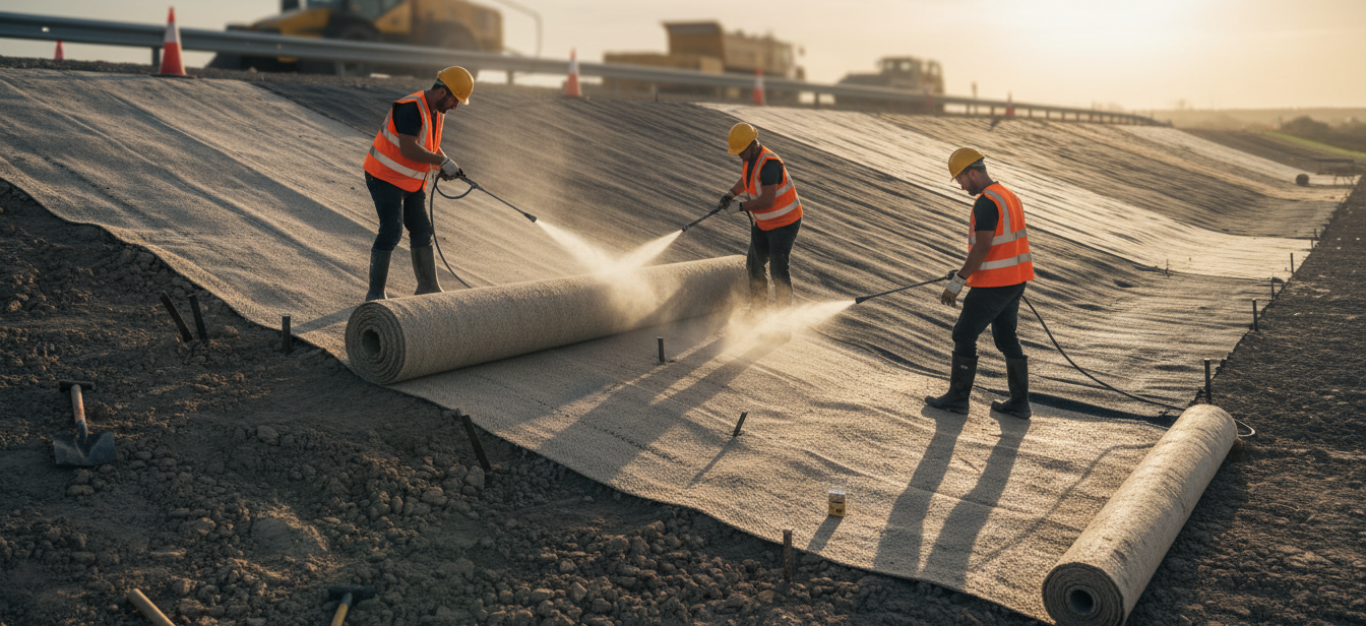
A cement blanket, also called GCCM (Geosynthetic Cementitious Composite Mat), is a flexible fabric filled with a dry cementitious mix. It is supplied in rolls, laid on the prepared surface and hydrated with water, and it hardens into a thin, durable concrete layer. New to the material? Read What Is a Cement Blanket? or see TerraShield Cement Blanket / GCCM →
1. Thickness
TerraShield Cement Blanket is available from 5 mm to 12 mm. A thicker mat holds more cementitious material per square metre, so it costs more per square metre. Thickness should come from the job, not from the budget: erosion severity, hydraulic flow and structural demand set it. Specifying a thicker mat than the design needs adds cost without adding value; specifying a thinner one can shorten the life of the lining.
2. Total area and order quantity
Material is priced against the area to be covered, so the first number any supplier needs is the area in square metres. Larger quantities are normally quoted differently from small trial lots, which is why a rate given for one job may not apply to another. To work out the area and the number of rolls:
• Measure the length of the slope, drain or canal.
• Measure the width along the surface to be lined, including side slopes and any anchor trench.
• Multiply length by width.
• Add the overlaps your design specifies, plus a small site allowance.
• Divide by the area of one roll. TerraShield rolls are 2 m wide and 25 m long, which is 50 m² per roll.
Example: a drain 500 m long with a lined perimeter of 3 m is 1,500 m² before overlaps. At 50 m² per roll, that is 30 rolls before overlaps and site allowance.
3. Application
Cement blanket is used for slope protection, ditch and canal lining, river, lake and pond banks, tunnels, and road and highway protection. The application affects the thickness you need, and it also affects how much fixing, jointing and surface preparation the job requires. A straight, open drain is a very different job from a steep, irregular slope.
4. Site location and delivery
Rolls are heavy, so freight is a real part of the delivered cost. Distance to site, truck access and how the rolls will be unloaded and moved on site all change the final figure. Always check whether a quote is ex-works or delivered to site.
5. Installation
Cement blanket reduces the labour and equipment a concrete lining needs, because there is no formwork and no mixing on site. It still has to be installed properly, so budget for surface preparation and trimming, laying the rolls with the overlaps and joints in the design, anchoring at edges and on slopes, water for hydration, and any detailing at inlets, outlets and structures.
A material rate on its own doesn't tell you what the lining will cost. Compare the full installed cost against the alternative, usually cast-in-place concrete (see Cement Blanket vs Traditional Concrete). Include:
• Formwork and mixing: cement blanket needs neither, as it is hydrated in place.
• Labour and machinery: reduced compared with conventional concrete.
• Programme time: installation can be up to 10× quicker than conventional concrete. Initial setting begins within 1–2 hours of hydration, and full curing and design strength are typically reached within 24–48 hours, depending on temperature, humidity and water availability.
• Difficult access and wet sites: GCCM can be installed in flowing or standing water, which can remove the cost of dewatering or diverting flow on some jobs.
• Design life: a properly installed cement blanket has a design life of 50+ years, depending on exposure conditions, application and environment.
On some jobs, the saving in time and site work matters more than the material rate. On others, especially large, easily accessible areas, conventional concrete may still compete. Run the numbers for your own site.
• Application (slope, drain, canal, river bank, tunnel, road)
• Required thickness, if your design has fixed it
• Total area in m², with drawings or site photos if available
• Site location (city and PIN code) and truck access
• Supply only, or guidance on installation as well
• Required delivery date
1. What is the price of cement blanket in India?
There is no fixed rate. It depends on thickness, quantity, delivery location and application. Share your area and site location to get a quote for your project.
2. How thick should a cement blanket be?
TerraShield Cement Blanket is available from 5 mm to 12 mm. The right thickness depends on erosion severity, hydraulic flow and structural demand, and your design engineer should set it.
3. What size is a cement blanket roll?
TerraShield cement blanket rolls are 2 m wide and 25 m long, which covers 50 m² per roll before overlaps.
4. Is cement blanket cheaper than concrete?
Compare the full installed cost for your site. Cement blanket needs no formwork or mixing, reduces labour and machinery, and installs much faster. The result varies with site access, area and thickness.
5. Can cement blanket be installed in water?
Yes. GCCM can be installed in flowing or standing water, which makes it suitable for canal lining, riverbanks and emergency erosion control.
6. How long does cement blanket last?
A properly installed cement blanket has a design life of 50+ years, depending on exposure conditions, application and environment.
TerraShield supplies Cement Blanket / GCCM across India. Send your area, thickness and site location, and our team will come back with a quote.
Get a quote for Cement Blanket → · WhatsApp +91 84200 12365 · info@terrashieldindia.com
Share your requirement and our team will get back with price & specifications.