

ISO 9001 : 2015

ISO 9001 : 2015
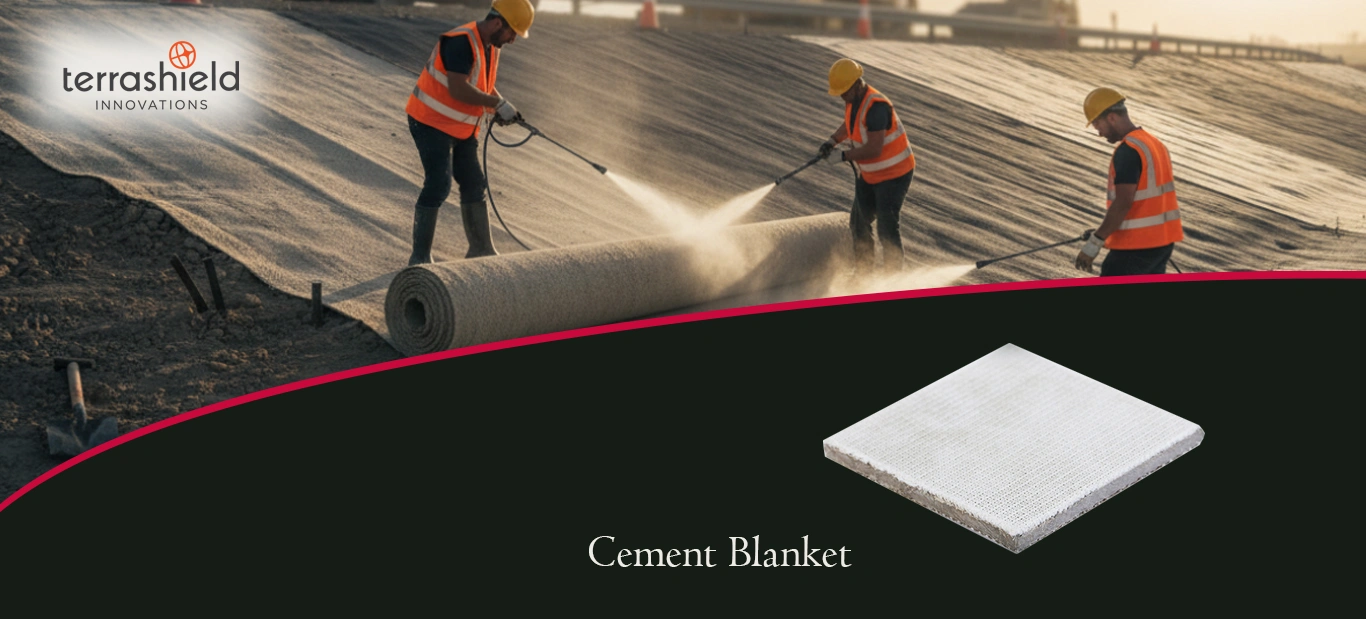
Time is the most important thing for big infrastructure projects. To make traditional concrete, you need a lot of procedures, skilled workers, formwork, curing time, and heavy machinery. This process can take a long time in faraway or hard-to-reach places. The Cement Blanket, on the other hand, is quick to install and provides long-term support.
This makes it ideal for flood control and urgent highway slope protection operations. Unlike poured concrete, a Cement Blanket may be hauled, rolled out, and wet on-site without any specific tools or people. You can easily put down protective layers that fulfill project deadlines and cause the least amount of trouble for the community. This speed advantage could be very important for India's rapid growth.
Infrastructure has to be able to handle harsh weather, heavy loads, and stress from the environment. Traditional concrete is strong, but it can break when it freezes and thaws or when the ground is unstable. Even in riverbanks, marshes, and tunnels, the Cement Blanket resists infiltration, erosion, and structural failure.
It is eco-friendly and low-carbon, which helps India reach its sustainability goals. Concrete Blanket and Concrete Mat products preserve the land without cased boreholes, which makes them better for the environment. The Geo Cement Blanket also makes projects more flexible in areas with sensitive ecosystems. The Cement Blanket strikes a compromise between engineering and environmental concerns by combining great strength and safety for the environment, which is hard to do with regular concrete.
Infrastructure planners need to think about cost-effectiveness. Traditional concrete construction has many steps that need people, machines, and time, which raises expenses. The Cement Blanket was cheaper to load, use, and install, which saved money on the project. It lets smaller groups build big systems without needing professional help or hefty tools. Its lengthy design life reduces repairs and replacements over decades, saving maintenance money. A Cement Blanket may cost more than regular concrete mixes, but the long-term benefits of lower labor, equipment rental, and maintenance costs make it a good choice for India's growing infrastructure needs.
The Cement Blanket is useful in many places in India because of its varied terrain. It can be used to defend slopes in the Himalayan foothills, line ditches in agricultural plains, protect roads and highways, protect tunnels and canals, and more. Cement Blanket installations can protect riverbanks and stop erosion in places that are likely to flood. In cities, they can also quickly repair roadways without causing traffic problems.
As infrastructure needs grow, new materials like the Cement Blanket may be used instead of concrete in some projects. It is a good base for modern Indian infrastructure since it is easy to construct, strong, safe for the environment, and cheap.