

ISO 9001 : 2015

ISO 9001 : 2015
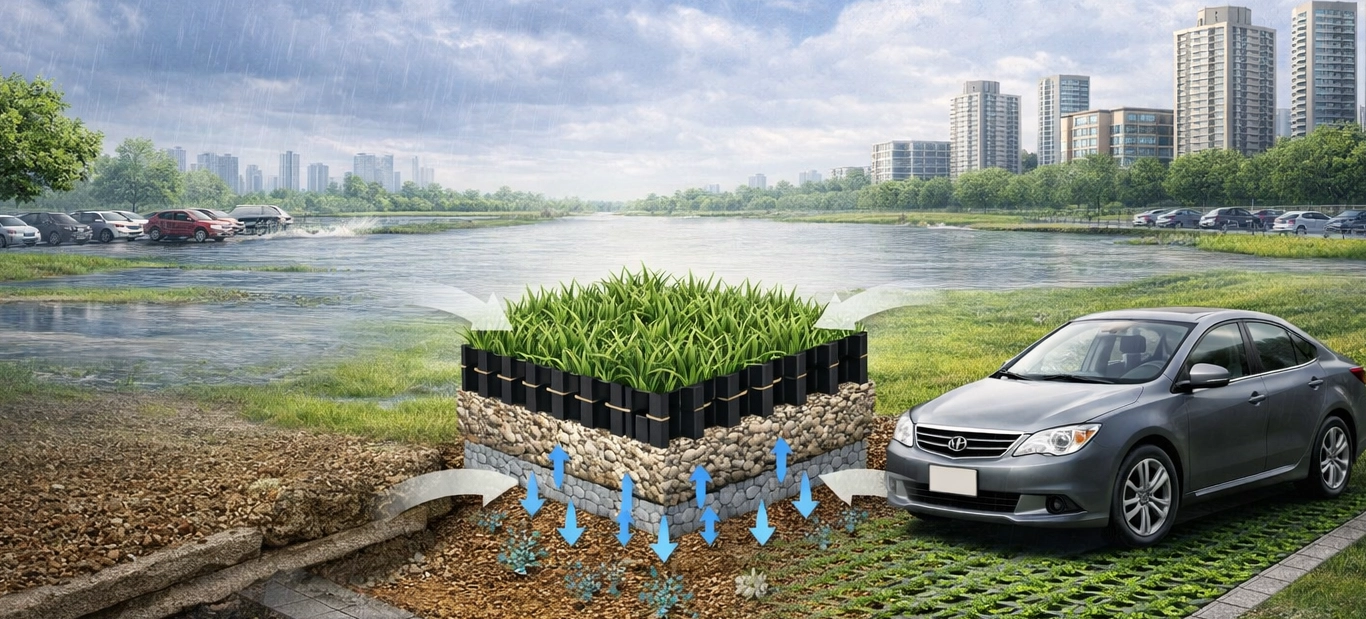
Rapid urbanization has significantly reduced natural ground surfaces that allow rainwater to seep into the soil. Traditional materials like asphalt and concrete block natural water infiltration, forcing rainwater to accumulate on roads, parking lots, and open areas.
This leads to several problems:
To overcome these issues, engineers and planners are turning to permeable paving systems, especially hdpe pavers in India, which allow water to pass through the surface and return to the soil naturally.
HDPE pavers are grid-based structures made from High-Density Polyethylene (HDPE), a durable and eco-friendly material. These grids are installed on the ground and filled with grass, soil, or gravel.
The design creates a strong yet permeable surface that supports vehicle loads while allowing rainwater to drain through the grid structure.
Key features include:
Because of these advantages, hdpe pavers in India are widely used in parking areas, driveways, walkways, and landscape projects.
1. Improved Water Infiltration
Unlike traditional concrete surfaces, HDPE grass pavers allow rainwater to pass through the grid openings and seep into the soil below. This helps reduce surface runoff and prevents water accumulation.
2. Reduced Flooding and Waterlogging
Permeable paving helps manage stormwater effectively by dispersing rainwater across the ground. This significantly reduces the risk of flooding in urban spaces.
3. Groundwater Recharge
One of the biggest benefits of hdpe pavers is their ability to support natural groundwater recharge. Instead of draining water away through pipes, the system allows water to infiltrate the soil naturally.
4. Strong Yet Sustainable Surfaces
Even though they allow water to pass through, HDPE pavers provide excellent structural stability. They can support vehicle traffic, making them ideal for parking areas, fire lanes, and pathways.
5. Eco-Friendly Infrastructure
Using hdpe pavers in India contributes to greener infrastructure development by reducing hard concrete surfaces and promoting vegetation growth.
Permeable HDPE pavers are widely used in multiple infrastructure and landscaping projects such as:
These systems not only improve drainage but also enhance the visual appeal of outdoor spaces.
As one of the trusted hdpe pavers suppliers, Terrashield focuses on providing high-quality permeable paving solutions for modern infrastructure.
Our HDPE pavers are designed to deliver:
With increasing climate challenges and urban flooding risks, permeable paving systems are becoming an essential part of modern infrastructure planning.
Stormwater management is no longer just an engineering concern—it is a crucial part of building sustainable cities. By integrating permeable HDPE grass pavers, developers and planners can reduce flooding risks while supporting natural groundwater recharge.
With the growing demand for eco-friendly infrastructure, hdpe pavers in India are quickly becoming a preferred solution for modern construction and landscaping projects.
As reliable hdpe pavers suppliers, Terrashield is committed to delivering innovative paving solutions that combine durability, functionality, and environmental responsibility.
1. What are HDPE grass pavers?
HDPE grass pavers are permeable grid structures made from high-density polyethylene that allow grass or gravel to grow through them while supporting vehicle loads.
2. How do HDPE pavers help with stormwater drainage?
HDPE pavers allow rainwater to pass through the surface and seep into the soil, reducing water runoff and preventing waterlogging.
3. Where are HDPE pavers commonly used?
HDPE pavers are widely used in parking areas, driveways, walkways, parks, and landscaping projects.
4. Are HDPE pavers durable?
Yes, HDPE pavers are highly durable, UV-resistant, and capable of supporting heavy loads, making them suitable for long-term outdoor use.
5. Why are HDPE pavers in India becoming popular?
With increasing urban flooding and drainage challenges, HDPE pavers in India are gaining popularity because they provide a sustainable and effective stormwater management solution.