

ISO 9001 : 2015

ISO 9001 : 2015
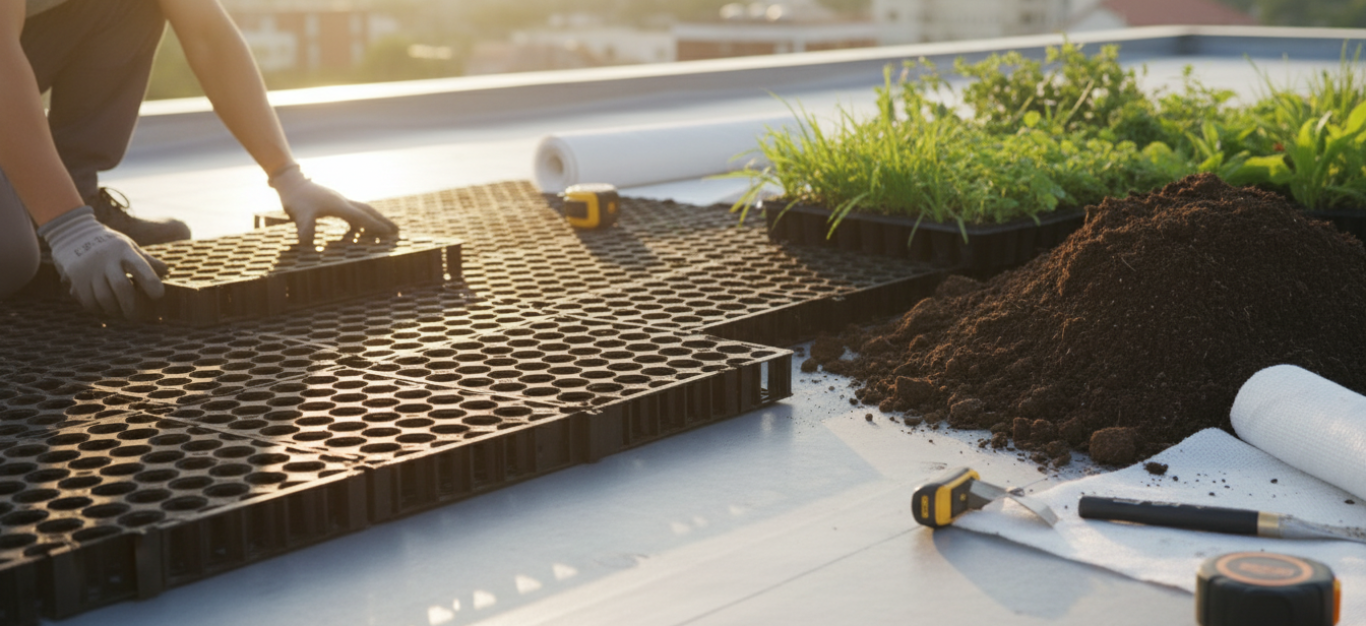
A drainage cell is a light-weight, high-strength modular plastic panel with an open, load-bearing core. Laid on a slab or membrane and covered with a filter geotextile and soil, it forms a continuous void through which water flows sideways to the drains.
TerraShield Drain Cell is made from high-strength recycled polypropylene. The modules interlock in the same plane and at right angles to one another, so they can be laid quickly over large areas and turned around corners and walls.
• Roof gardens and green roofs
• Landscape decks, plaza decks, balconies and pool sides
• Planter boxes
• Basement and retaining walls
• Sports fields and golf courses
• Concealed drains, storm drains and road edge drains
• Sub-surface drainage, groundwater management and water sensitive urban design (WSUD)
| Property | 20 mm | 30 mm |
|---|---|---|
| Material | Recycled polypropylene | Recycled polypropylene |
| Module size | 500 mm × 250 mm | 500 mm × 250 mm |
| Height | 20 mm | 30 mm |
| Weight | 2.5–3 kg/m² | 2.5–3 kg/m² |
| Surface void area | 67% | 67% |
| Internal void area | 92% | 92% |
| Compressive strength | 100 tons/m² | 140 tons/m² |
| Drainage capacity @ 1% hydraulic gradient | 12.5 l/m·s | 16.5 l/m·s |
How to read it: both modules have the same footprint and void area. The 30 mm module carries more load (140 vs 100 tons/m²) and moves more water (16.5 vs 12.5 l/m·s at a 1% gradient).
• 20 mm: a common choice for planter boxes, balconies and light landscape decks, where loads and flows are moderate and build-up height is limited.
• 30 mm: better for larger roof gardens and podium decks with deeper soil, heavier loads or higher rainfall runoff, and wherever maintenance traffic or equipment will cross the deck.
The final choice depends on the soil depth, design loads, the area draining to each outlet and local rainfall, so it should be confirmed by the project designer.
1. Structural slab with waterproofing membrane, laid to fall towards the outlets.
2. Drain cell modules laid and interlocked over the membrane. They also protect the waterproofing from point loads and backfill damage.
3. Filter geotextile over the cells, so soil fines do not clog the void.
4. Growing medium or soil, then planting or paving.
5. Outlets and drains connected so collected water leaves the deck.
• High flow capacity even under compression
• Thin, light profile that saves build-up height and slab load
• Protects waterproofing membranes during backfilling
• Works with geotextiles for filtration and clogging resistance
• Quick to lay and easy to connect to outlet drains
• Stable under repeated loading on plaza decks and green roofs
• Durable polymer with a long service life
1. What is a drain cell used for?
A drain cell creates a sub-surface drainage layer under soil or paving on roof gardens, podium decks, planter boxes, basements, sports fields and similar areas.
2. What is the difference between 20 mm and 30 mm drain cells?
Both are 500 × 250 mm modules with 67% surface and 92% internal void area. The 30 mm module has higher compressive strength (140 vs 100 tons/m²) and higher drainage capacity (16.5 vs 12.5 l/m·s at 1% gradient).
3. Do I need a geotextile over the drainage cell?
Yes. A filter geotextile over the cells stops soil fines from entering and clogging the drainage void.
4. What material is TerraShield Drain Cell made of?
High-strength recycled polypropylene.
Share the deck or planter area, soil depth, required module (if fixed) and site location, and our team will confirm quantities and pricing.
Get a quote for Drain Cell → · WhatsApp +91 84200 12365 · info@terrashieldindia.com
Share your requirement and our team will get back with price & specifications.