

ISO 9001 : 2015

ISO 9001 : 2015
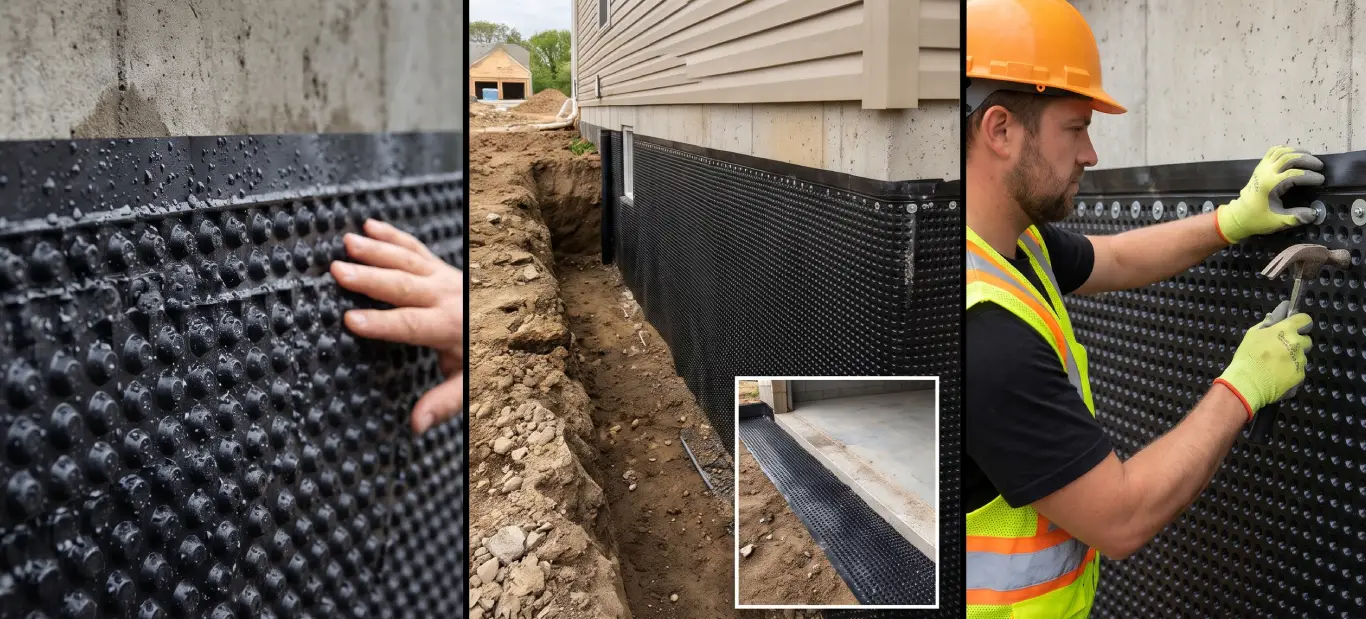
A dimple board is a lightweight sheet made from high-density polyethylene (HDPE) with a pattern of raised dimples. It is also known as a dimple sheet, studded drainage membrane or drainage board. The raised dimples create a gap between the board and the surface, allowing water to flow through the drainage cavity.
HDPE dimple boards are strong, lightweight and resistant to rot. They are generally supplied in rolls, making them easy to transport, cut and install at construction sites. These boards are widely used in foundation protection, basement waterproofing and drainage applications.
Dimple board waterproofing works by providing a protective drainage layer between the structure and surrounding soil. Groundwater and moisture can create pressure against basement and foundation walls. A dimple board creates an open drainage cavity that allows water to flow downwards towards a drainage pipe or sump system.
This drainage arrangement helps reduce hydrostatic pressure on walls and protects the underlying waterproofing membrane from damage during backfilling. By allowing excess water to move away from the structure, a dimple drainage board supports an effective and long-lasting waterproofing system.
A dimple board is not a waterproofing membrane on its own. It works alongside a suitable waterproofing system to provide additional protection. The waterproofing membrane acts as the primary barrier against water penetration, while the dimple board creates a drainage cavity and protects the membrane from mechanical damage.
Both components work together to manage groundwater effectively. The waterproofing membrane prevents water from entering the structure, while the dimple board helps channel excess water towards the drainage outlet.
Using a dimple board in waterproofing systems offers several advantages for foundations, basement walls and other underground structures. Some of the major benefits include:
Reduces Water Pressure: The drainage cavity allows groundwater to flow towards the drainage system, helping reduce hydrostatic and backfill pressure against structural walls.
Protects the Waterproofing Membrane: The board acts as a protective layer against sharp stones, soil movement and mechanical damage during backfilling.
Improves Drainage: The raised dimples create an open channel that allows excess water to move downwards towards the drainage outlet.
Helps Keep Walls Dry: Effective water drainage helps reduce moisture accumulation, damp patches, mould growth and salt deposits on basement walls.
Lightweight and Easy to Install: Dimple boards are supplied in rolls and can be easily transported, cut and fixed at construction sites.
Durable Performance: HDPE is resistant to rot and many chemicals commonly found in soil, making it suitable for long-term underground applications.
Versatile Applications: Dimple boards can be used on vertical walls as well as horizontal surfaces, including foundations, podiums, terraces and planter areas.
Dimple boards are widely used in construction and infrastructure projects wherever effective drainage and waterproofing protection are required. Their applications include foundations, basements, retaining walls, terraces and underground structures.
Foundations remain exposed to groundwater and soil moisture for long periods. A dimple drainage board for foundations creates a drainage layer around below-ground walls and foundation structures. It allows water to flow towards the drainage system, helping protect the waterproofing membrane and reduce moisture-related problems.
It is an important component of foundation waterproofing and drainage solutions, particularly in projects where groundwater management is essential.
Basement walls are frequently exposed to soil moisture and groundwater pressure. A basement wall drainage membrane made from dimple board is installed over the external waterproofing layer. It protects the membrane from backfill damage and provides a drainage channel for water to reach the footing drain.
This arrangement helps manage groundwater around basement walls and supports long-term structural protection.
Dimple sheets for waterproofing are also used in horizontal applications such as podium decks, terrace gardens and planter boxes. They provide a drainage cavity that helps remove excess water from the surface and protects the underlying waterproofing system.
In landscaped areas, these boards help prevent water accumulation around plant roots and reduce prolonged exposure of the slab to standing water.
Apart from foundations and basements, dimple boards are also used in several construction and infrastructure applications, including:
• Retaining walls
• Lift pits and underground tanks
• Tunnels and underpasses
• Landscaped roofs and green decks
Dimple board thickness is an important factor when selecting a drainage solution for a construction project. Different thickness options provide different drainage cavity dimensions and load-bearing characteristics. Taller dimples generally create a larger drainage space, but the final selection should depend on project-specific design requirements.
| Thickness | Drainage Cavity | Typical Applications |
|---|---|---|
| 8 mm | Smallest | Light-duty walls, planters and podiums |
| 10 mm | Medium | Standard basement and retaining walls |
| 13 mm | Largest | Deep basements, heavy backfill and higher drainage requirements |
This is a general selection guide. The appropriate thickness depends on groundwater conditions, wall depth, expected loads and drainage design. Always consult a waterproofing specialist or structural engineer before finalising the product.
Dimple boards are available with or without a bonded geotextile filter fabric. The right option depends on the installation environment and the type of soil surrounding the structure.
Dimple Board With Geotextile: A bonded geotextile fabric acts as a filter layer and helps prevent fine soil particles from entering and blocking the drainage cavity. This option is suitable for applications where the board is in direct contact with soil or backfill.
Dimple Board Without Geotextile: Plain dimple boards are suitable for enclosed applications or situations where a separate filter layer is already incorporated into the drainage design.
Proper installation is essential to achieve effective drainage and protect the waterproofing membrane. The following steps explain the general installation process for a vertical wall:
1. Check the Waterproofing Membrane: Ensure that the waterproofing membrane has been properly installed and is free from visible damage before fixing the dimple board.
2. Position the Dimple Board: Place the board against the wall with the dimples facing the wall. If the board has a geotextile layer, the fabric side should face the soil.
3. Fix the Board at the Top: Secure the board using suitable mechanical fixings and install an appropriate termination detail along the top edge.
4. Overlap the Sheets: Provide suitable overlaps between adjacent sheets. An overlap of at least 10 cm may be used where specified by the manufacturer's installation instructions.
5. Connect to the Drainage System: Ensure that the bottom edge connects properly with a footing drain or suitable drainage outlet so that collected water can flow away from the structure.
6. Backfill Carefully: Use suitable backfill material and avoid direct impact from sharp stones or construction debris that could damage the drainage board.
For horizontal applications, install the board in the orientation specified by the manufacturer and project drainage design. Store unused rolls away from prolonged direct sunlight and adverse weather conditions.
Incorrect installation can affect the drainage performance and reduce the effectiveness of the waterproofing system. Some common mistakes to avoid include:
• Installing the board in the wrong orientation.
• Forgetting to provide a drainage outlet at the base.
• Leaving gaps or insufficient overlaps between sheets.
• Using a plain board in soil conditions where a geotextile filter is required.
• Allowing sharp stones or rough backfill material to damage the sheet.
Following the manufacturer's installation guidelines and ensuring proper drainage connections can help prevent these problems and improve the long-term performance of the system.
What is a dimple board used for?
Dimple boards are used to create drainage channels and protect waterproofing membranes in basement walls, foundations, retaining walls, podiums and planter areas.
Which way should dimple board dimples face?
For typical vertical wall installations, the dimples generally face the wall, while the geotextile side, if present, faces the surrounding soil. For horizontal applications, follow the manufacturer's recommended orientation.
Does a dimple board replace waterproofing?
No. A dimple board does not replace a waterproofing membrane. It works alongside the membrane by providing drainage and mechanical protection.
Which dimple board thickness should I choose?
An 8 mm board may suit light-duty applications, a 10 mm board may be appropriate for standard walls, and a 13 mm board may be considered for deeper or higher-drainage-demand applications. The final choice should be based on engineering requirements and manufacturer specifications.
A dimple board is an effective drainage and protection component in modern waterproofing systems. It helps manage groundwater, reduce water pressure against structural walls and protect waterproofing membranes from damage. From basement walls and foundations to retaining walls, podiums and terraces, HDPE dimple boards offer versatile applications in construction.
Selecting the appropriate thickness, choosing between geotextile and non-geotextile options, and following the correct installation process are essential for achieving reliable performance. When combined with a suitable waterproofing membrane and properly designed drainage system, a dimple board can contribute to the long-term protection of buildings and infrastructure.
Share your requirement and our team will get back with price & specifications.